Voltage doesn't change running cost: a watt is a watt, and at the same SEER2 both use about the same energy. What changes is the circuit and the size. 115V systems need a dedicated 15 or 20 amp household circuit and top out around 12,000 BTU; 230V systems need a double-pole 240V breaker and come in every size up to 36,000 BTU and more.
Side by side
| 115V | 230V | |
|---|---|---|
| Circuit | Dedicated 15-20 A, 120 V | Double-pole 240 V (208-230 V) |
| Typical sizes | 6,000-12,000 BTU | 9,000-36,000+ BTU |
| Wire | Lighter gauge, shorter runs | Two hot conductors |
| Running cost | Same at equal SEER2 | Same at equal SEER2 |
When 115V makes sense
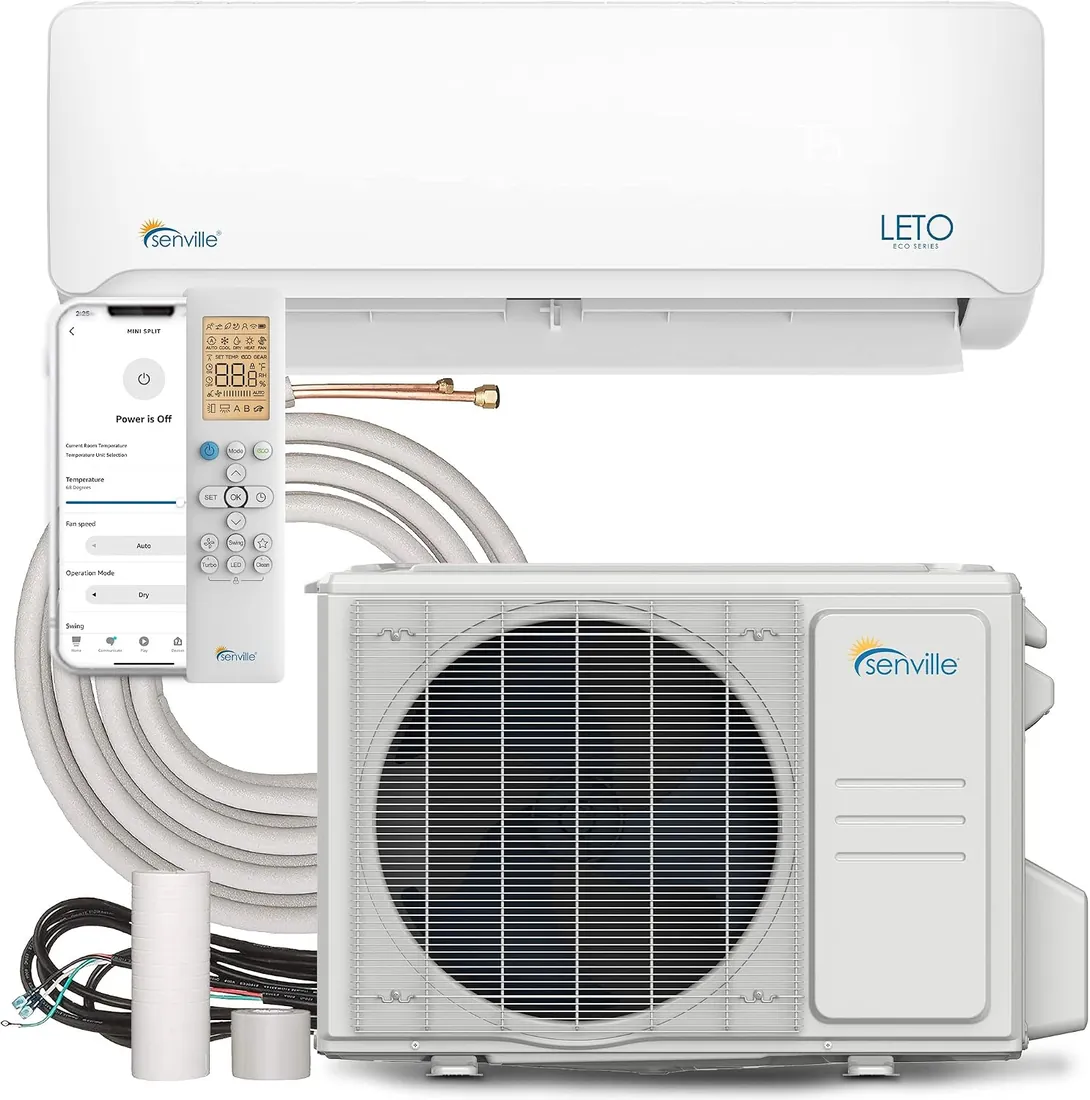
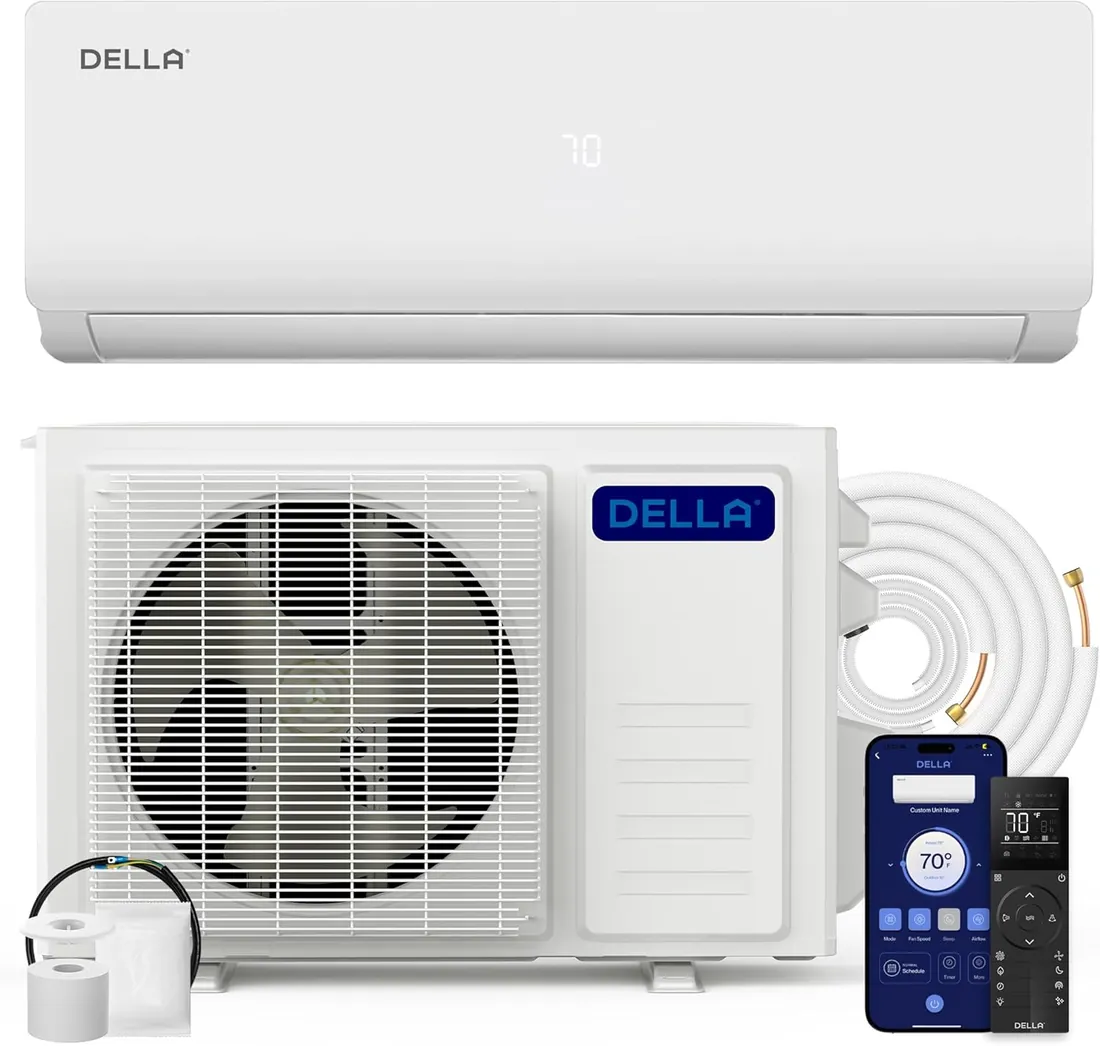
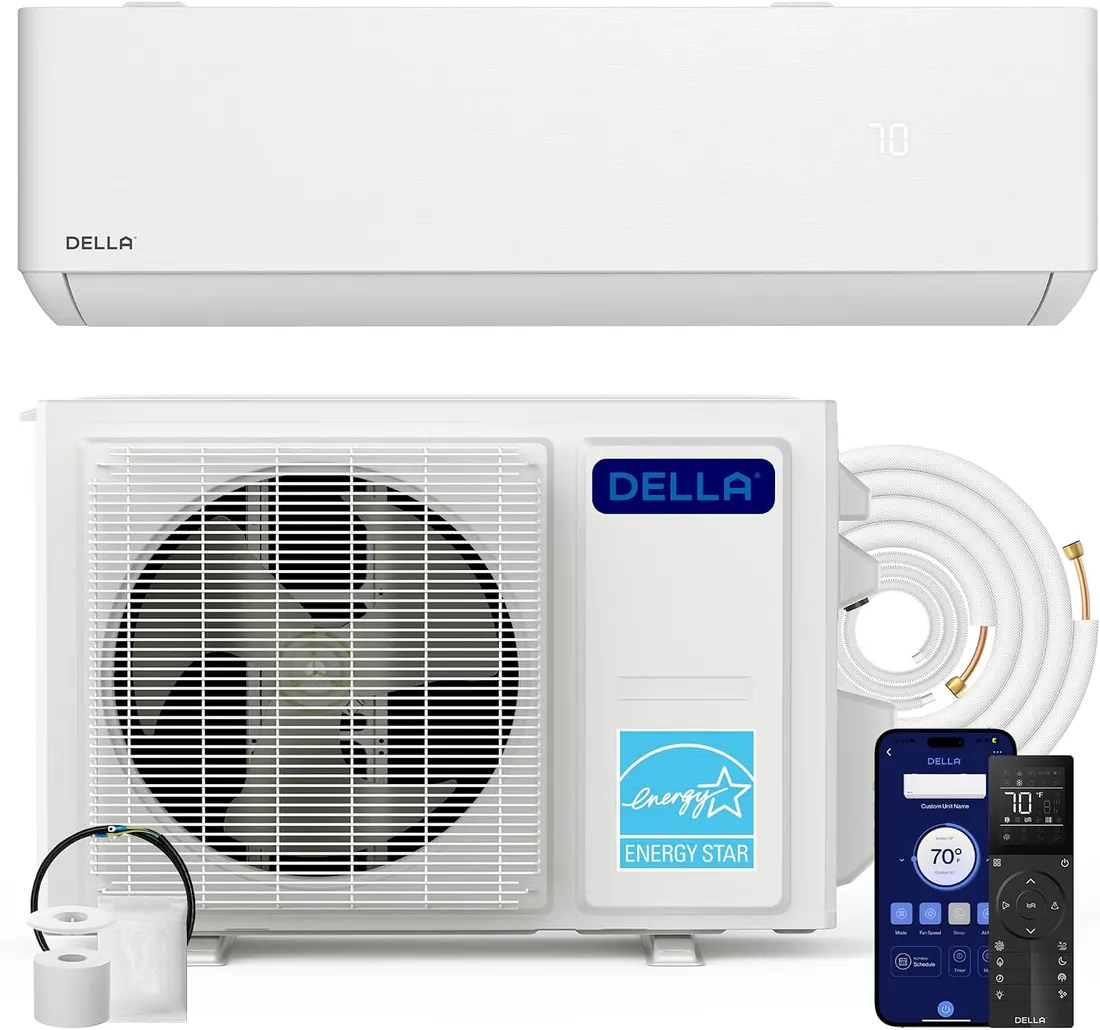
A bedroom, office or small addition where a 240V run would mean opening walls or upgrading the panel. Systems like the Senville LETO 12,000 BTU 115V and DELLA Vario 12,000 BTU 115V are built for that.
When you need 230V
Rooms over about 550 sq ft, cold climates where you need heating capacity, garages and multi-zone systems. Many 9,000 and 12,000 BTU systems also come in 230V versions, which draw half the current for the same power.